

What to Do About Lipedema? Discover the Wonder Leggings as Your Support!
Disclaimer: The content on this blog is carefully vetted, but it is provided solely as general lifestyle advice and health support, and does not replace in-person consultations with a physician, naturopathic practitioner, or ecotrophologist. Always consult qualified medical experts if you have any health concerns or symptoms. All use of the information on this blog is at your own risk. We assume no liability for any damages or health issues that result from applying any of the content featured here.
Do you suffer from heavy legs, have swollen thighs and knees, and feel pressure pain in these areas? You may be living with lipedema. This is a fat distribution disorder that primarily affects women, often severely limiting their daily lives. In this post, we answer the question: What are lipedemas and What can you do if you are suffering from lipedema, or to treat this condition?? You’ll find compact, practical knowledge about recognizing and managing lipedema, plus tips to help you regain more mobility and joy in your daily life with the right clothing. I’ll show you how the Wonder Leggings can bring greater ease to your everyday routine when living with lipedema.

Lipedema: What exactly is it?
The first association most people have with lipedema is heavy legs and swollen thighs. Women living with this condition suffer particularly from being perceived by others as simply overweight and misshapen, with others incorrectly assuming their symptoms come from a poor diet and lack of physical activity.
What can I do?
In reality, though, lipedema has very little to do with diet or exercise. Rather, it is a chronic disorder of the body’s fatty tissue. With this condition, excess fat accumulates in the legs, hips, buttocks, and sometimes even the arms. Typically, lipedema affects both sides of the body symmetrically. It is what is known as a body fat distribution disorder.
Lipedema typically progresses through three stages
Lipedema most often progresses through three stages, each of which reflects the condition's severity, and also in relation to the question What to do for lipedema? must be taken into account:
- Stage I: At this stage, the symptoms are still subtle and not yet a direct sign of an underlying medical condition. The skin is usually still smooth, but you may already experience the first signs of hypersensitivity, swelling, and pain. You will typically notice these symptoms after spending long periods standing or sitting.
- Stadium II: At this stage, the symptoms become more distinct. The skin may appear uneven, and nodules and lumps form in the fatty tissue. Pain, tenderness, and swelling are more pronounced.
- Stadium IIIAt this advanced stage, many women already experience severe, sustained distress. Their legs grow increasingly heavy, the skin on their legs and thighs develops visible dimpling, and fatty tissue accumulates along with thickened skin across the entire lower region of the body. Pain, excessive sensitivity, and swelling can severely disrupt daily life.
In contrast to these changes affecting the legs, the upper body is often very slim, and is either entirely unaffected by this fat distribution disorder, or only impacted to a very minor degree.
Is lipedema even curable?
Unfortunately, lipedema is not curable. This fat distribution disorder regrettably affects women for their entire lives. It is therefore important to identify the condition in a timely manner and begin to take action against lipedema. The sooner and more consistently appropriate measures are taken to address lipedema legs and lipedema thighs, the better their effects can be brought under control. The Wonder Leggings can help you ease several of these symptoms and restore a sense of lightness to your daily routine. We will share more details on that later.
What symptoms occur with lipedema?
Those affected are primarily burdened by the deformation of their legs and the resulting widening of their entire lower body. As a result, they are often limited in their clothing choices and struggle to find pants that fit properly. In addition to these aesthetic limitations, lipedema is also accompanied by numerous physical health issues.
These are the most common symptoms associated with lipedema:
-
Pain in the legs and thighs
Affected individuals typically experience pain in the impacted areas, which can vary widely in severity. The pain is most often described as pressure-like, stabbing, or burning. The intensity of this pain can increase or decrease over the course of a day. Lipedema pain frequently occurs at rest, without the affected person having engaged in any physical exertion. -
Excessive sensitivity
Affected areas of the body are often sensitive to touch. Even light touches can be uncomfortable or painful. -
Swelling and edema
Swelling or edema is a common symptom of lipedema. The affected areas of the body are swollen and cause sensations of pressure and heaviness. -
Skin irregularities
Your skin is also naturally affected by changes in fat distribution. It appears uneven and rippled, with visible lumps and bumps in the fatty tissue. -
Bruising on the thigh
Patients with lipedema have an increased tendency to develop bruises, which occur even after minor injuries and light pressure. -
Reduced mobility
Lipedemas very frequently limit mobility, and as a result also quality of life, due to the pain and excess weight associated with the condition.
So what can you do if you suffer from lipedema? Given the unpleasant symptoms, you should, at the very first signs, the Treat Lipedema be left. In most women, the first symptoms appear as early as puberty, affecting the hip and buttock region. The condition’s characteristic 'saddlebag thighs' typically develop at this stage. As the disease progresses, the legs and occasionally the arms are also affected, either entirely or partially.
What are the known causes of lipedema?
To answer the question 'What can be done about lipedema?', the underlying causes must first be clarified. When the first changes to the body become visible, leg circumference increases and pants no longer fit, many women initially assume poor diet is to blame. In reality, though, the delicious dessert from the previous day has absolutely nothing to do with the development of lipedema.
This is a complex medical condition whose exact causes have not yet been fully understood. A combination of genetic, hormonal, and environmental factors a role. There appears to be a genetic component to lipedema, as the condition often runs in families. Women whose mothers or sisters have lipedema have a higher risk of being affected by the condition themselves.
Hormonal changes, such as those that occur during puberty, pregnancy, or menopause, can also worsen or trigger lipedema. The fact that the condition develops almost exclusively in women also indicates that hormones play a crucial role.
Furthermore, it is also assumed that Inflammatory reactions in the body could be underlying causes. Studies indicate that chronic inflammation in adipose tissue leads to increased fat accumulation, which in turn triggers the uncomfortable symptoms. All of these causes are associated with lipedema – the exact interplay between them, however, remains unclear.
Lipedema Treatment: What can you do about lipedema?
Even with advances in medical research, lipedema remains a challenge for those living with the condition, as there is currently no cure. Nonetheless, a range of treatment options exist that can ease symptoms, slow the progression of the disease, and improve patients’ quality of life. These options include both conservative, non-surgical approaches and surgical interventions. The question of how to manage lipedema must be assessed on an individual basis for every female patient. Fundamentally, all medical treatments inherently come with associated costs, as well as additional strain on the body. Beyond these formal interventions, specialized compression clothing offers fast, direct relief.
Compression garments provide support for lipedema
A standard recommendation for anyone living with lipedema is always to wear compression garments. Compression garments apply controlled pressure to affected tissue. This pressure squeezes, or compresses, the tissue, which stimulates the flow of lymphatic fluid. It also reduces pressure on the blood vessels and nerves in the area, allowing pressure-related pain to subside. Compression garments distribute this pressure evenly, which minimizes the formation of edema. Many women find specialty compression pants and stockings uncomfortable and restrictive. I completely understand that—especially when these garments aren't tailored to fit the female body. That’s why I’ve curated a truly practical, supportive collection in my shop, led by the Wonder Leggings and including a full range of additional compression wear, for every woman seeking fast, long-lasting, and modern relief from lipedema.
Everyday compression wear by VeraMeyer
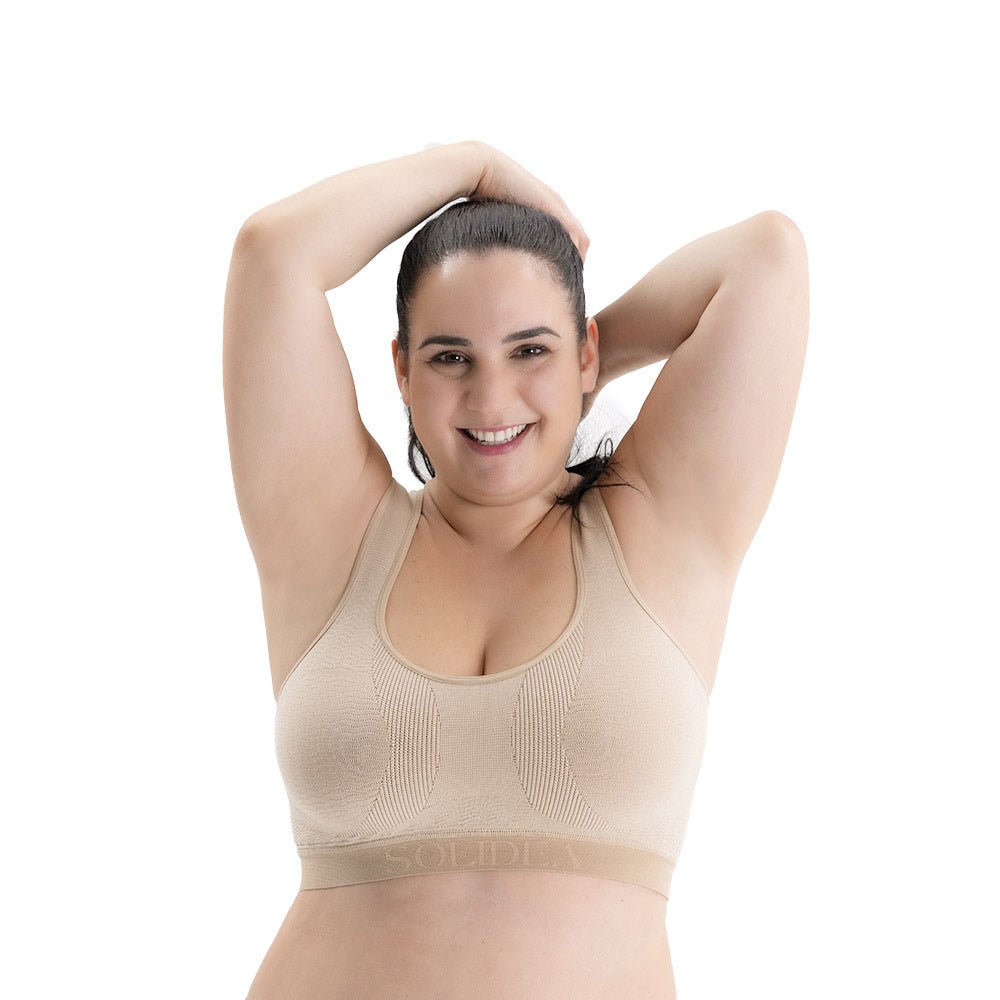
Through my shop and the compression clothing available at VeraMeyer, I want to offer anyone affected an answer to the question, "What can you do about lipedema?" You do not have to simply put up with your symptoms, nor settle for the uncomfortable compression tights that are so difficult to put on and take off, and that also noticeably restrict your everyday mobility. That is why you will find an extensive collection of compression apparel here, which (among other use cases) was specially developed for lipedema. The collection includes, in addition to the Lipedema Pants also special Arm sleeves, compression wear and Compression Bras. A truly special highlight for many women with lipedema is the Wonder Leggings from my shop. And as the name suggests: they quite literally work wonders.
Lymph-O Fit – the perfectly fitting pants for lipedema
The centerpiece of the collection is the lipedema pants Lymph-O-Fit. Unlike standard compression pants, these are not extremely tight—instead, small integrated massage nodes are integrated into the inner layer of the fabric. These integrated massage nodes shift the fabric against itself with every movement. While worn, this action drains major clusters of lymph nodes and vessels located in the lower abdomen, as well as inguinal lymph nodes, plus the vessels running from the back of the knees down to the ankles. This stimulates the functions of the lymphatic system. At the same time, these Wonder Leggings deliver a gentle but effective compression effect. Thanks to their cut, breathable material, and relaxed fit, these pants are far more comfortable to wear than most other compression leggings. You get all the fantastic benefits without spending an hour struggling to squeeze into your clothing first thing in the morning. Instead, these leggings fit incredibly comfortably and look great too.
While traditional compression tights are uncomfortable to wear under your regular everyday clothing, you can easily wear the Wonder Leggings just like leggings, styling it with a long blouse, blazer, or pullover. Thanks to its design and tailored fit, these versatile leggings are a true all-rounder, perfect for both casual leisure time and daily work wear.
No matter what stage your condition is at: the Wonder Leggings can be a valuable support in your daily life. In addition to its compression effect, it also leaves your legs feeling lighter, stabilizes your muscles and joints, and boosts your performance.
Conservative treatment options for lipedema
The standard treatment for lipedema focuses on improving lymphatic flow, thereby reducing swelling and easing the pressure pain experienced by those affected. Two core components of this treatment are manual lymphatic drainage and compression therapy.
The manual lymphatic drainage (MLD) it is a special massage technique that mobilizes lymph fluid in the affected areas of the body, thereby improving lymphatic flow. This is achieved through gentle, rhythmic movements that stimulate the natural flow of lymph fluid. MLD is performed by specially trained therapists and can help reduce swelling, relieve pain, and improve overall well-being.
At the Compression Therapy those affected wear compression garments, such as compression stockings or Compression bandages, to put pressure on your legs and thighs. This helps support lymphatic flow, reduce swelling, and slow the progression of lipedema. Compression garments are typically worn during the day and should fit as snugly as possible to deliver the intended therapeutic effect. I urge you not to cut corners here. Low-quality leggings or stockings won’t provide the support your body deserves, and their effectiveness fades quickly. You should only invest in high-quality pieces. The styles in my shop feature modern designs that set them apart from classic compression wear. The Lymph-O-Fit legging also delivers an added benefit to your lymphatic system thanks to its woven-in integrated massage nodes – standard tights and similar products simply can’t compete with that.
Lipedema removal through surgery
If conservative methods are no longer sufficient to improve well-being and quality of life, lipedema can also be treated surgically. Two different surgical procedures are used depending on the indication.
What can you do about lipedema? An overview of surgical treatment methods:
-
Liposuction
Liposuction is a surgical procedure that removes excess fatty tissue from the affected areas of the body. Abnormal fatty tissue is reduced to ease the symptoms of lipedema and minimize pain wherever possible. This procedure can also reduce swelling and improve the appearance of the legs. During the procedure, small external incisions are made in the skin, through which a thin cannula is inserted. The fatty tissue is then removed by suctioning it through the cannula. -
Liposuction and Fat Grafting
With the lipofilling technique, fat tissue is harvested from other areas of the body, most commonly the abdomen, thighs, or hips, and then injected into the affected regions. The goal of this procedure is to restore balance to the body's contours by injecting the suctioned fat into areas that have lost volume or have an uneven shape. For patients with lipedema, lipofilling can improve the appearance of the legs and restore more uniform contours. This method can also be used in combination with liposuction.
A common misconception is that the fat cells suctioned from the affected areas can simply grow back. What many people do not know: fat cannot regrow in the areas where it was suctioned out. Every person is born with a fixed number of fat cells. In cases of lipedema, the legs and thighs do not become wider because the number of fat cells increases, but simply because those cells grow larger. This is how the cells in the surgical lipedema treatment permanently removed
By the way: Wearing appropriate compression garments is recommended following any surgical procedure. VeraMeyer’s Wonder Leggings can be your trusted companion for this as well.
Complementary measures and therapies to alleviate lipedema
There are probably very few things that people living with lipedema would pass up if it meant easing their symptoms. Whether complementary measures ultimately prove successful depends on a wide range of different factors. Some patients find relief through alternative therapies such as acupuncture, aromatherapy, or reflexology. While these approaches do not directly alleviate the condition’s symptoms, they can help reduce stress and improve overall blood circulation.
Excessive stress can negatively impact lipedema, as it promotes the development of inflammation and persistent muscle tension, which can impair lymphatic flow. Relaxation techniques such as meditation, progressive muscle relaxation, or deep breathing can also be used as a complementary addition to lipedema treatment.
Lipedema legs: Treatments using hormones, diets, and laxatives are ineffective
Anyone searching the internet for answers to the question "What can you do about lipedema?" will encounter a range of advice and treatment tips that have actually been proven ineffective or harmful. There are no medications that can cure a lipedema diagnosis. Laxatives are sometimes cited as an option, for example, but they may only ever be used short-term as a supplement to lymphatic drainage, and always in consultation with your treating therapist. If patients use these pills long-term, fluid loss can cause protein levels in the body and tissue to rise. Since protein draws excess water into the body, this can actually end up worsening the condition. Diets and hormones are also ineffective over time. None of these measures will cause fat cells to shrink or break down. I recommend that you only rely on methods that have proven successful. Get advice from your doctor, and implement meaningful changes to your daily routine. This can include wearing compression garments like the "Wonder Leggings" — a seemingly small adjustment that delivers huge benefits!
You can order the Wonder Leggings from my shop in various designs – both as fashionable leggings and as a athletic jeans. After placing your order, you will receive these pants within a few days. Unlike many other compression garments, you do not need unusual patience or any special tricks to put on these Wonder Leggings: simply slip them on and feel great!
What worsens lipedema?
In addition to improper treatment, various life circumstances and behaviors can also cause symptoms to worsen. Anyone who truly wants to address their lipedema should avoid these factors and maintain a healthy lifestyle wherever possible.
-
Lack of movement
Many jobs these days barely allow you to get regular movement. That makes it all the more important to prioritize staying active whenever you can — for example, by walking home, or fitting in other forms of exercise. A lack of movement can impair lymph flow and contribute to increased buildup of fat and fluid in the body. -
Unhealthy diet
An unbalanced diet can promote inflammation in the body, thereby worsening lipedema. A high sodium intake also contributes to water retention and can increase swelling. -
overweight
Every extra kilogram carried on the body puts additional pressure on the lymphatic system and blood vessels. This leads to further buildup of fat and fluid in the affected areas. -
Stress
It has long been known that chronic stress can cause inflammation in the body and impair the immune system. -
Tight clothing
Tight-fitting clothing impairs lymphatic flow and blood circulation in the body, which can worsen lipedema symptoms. That’s why the Wonder Leggings is such a practical everyday companion: it fits neither too tight nor too loose, and delivers noticeable, tangible effects for you.
Treatment of lipedema, or its effects, must always be approached holistically. The use of appropriate conservative or surgical methods should always be implemented alongside a lifestyle that is as healthy as possible.
Lipedema & severe pain: What can you do?
Excessively severe pain in people with lipedema indicates a advanced stage of the disease in place. In this case, Complex Physical Decongestive Therapy (KPE) is most commonly used. This therapy consists of four pillars that interlock like gears to relieve symptoms and slow the progression of the condition.
- Pillar: Manual Lymphatic Drainage to Reduce Swelling
- Pillar: Optimal Skincare to Maintain Skin Health
- Pillar: Wearing compression stockings
- Pillar: Movement Therapy
The combination of these four pillars of Complex Physical Decongestive Therapy is a holistic treatment for people with advanced-stage lipedema.
Proper nutrition for lipedema
A healthy, balanced diet can reduce symptoms and also prevent excess weight from developing on top of the existing fat distribution disorder. Recommended foods include fruits, vegetables, whole-grain products, and lean protein. Furthermore, switching to a low-glycemic diet has been proven to have positive effects. This diet centers on foods that cause blood sugar levels to rise only slowly.
When nutrition experts are asked what can be done to manage lipedema, they frequently recommend a ketogenic diet. This is a high-fat, low-carbohydrate eating plan that can put the body into a state of ketosis. In this state, the body uses fat as its primary source of energy. Only small amounts of carbohydrates and moderate quantities of protein may be consumed to keep insulin levels low. This process boosts fat burning and eases the symptoms of lipedema. Before you change your diet, you absolutely must discuss your plans with a doctor!
What should you not eat if you have lipedema?
If you want to feel good in your body while living with and despite your lipedema, you should cross several foods off your shopping list.
- Sugary foods – they cause blood sugar levels to rise faster and promote inflammation in the body.
- Saturated fatty acids – they can also worsen inflammation in the body and exacerbate lipedema.
- White flour products have a high glycemic index and can cause blood sugar levels to rise rapidly
- High-salt foods promote water retention in the body and worsen swelling.
- Alcohol is high in calories and disrupts your metabolism
- Excessive consumption of caffeine causes dehydration and destabilizes blood sugar levels.
Which sports are good for people with lipedema?

Sports and physical activity are essential components of any lipedema treatment. Choose types of exercise that are gentle on your body, support lymphatic flow, and don’t put excess strain on your joints. Water aerobics or aqua jogging are perfect examples of suitable activities. Movements in water are exceptionally gentle on your body. Cycling is also a joint-friendly sport that boosts circulation and strengthens your body.
If you love spending time outdoors, you can grab your Nordic walking poles. On these dedicated structured walks, you’ll build endurance and train your entire body. To complement this activity, yoga or pilates can improve your posture and reduce stress.
In my shop, you’ll find the Wonder Leggings isn’t just for everyday wear—it also comes in a special version designed for your workouts.
What is the difference between lipedema and lymphedema?
Lipedema and lymphedema are two very different clinical conditions that are frequently confused with each other. Lipedema is a fat distribution disorder in which excess fatty tissue accumulates in specific areas of the body.
Conversely, lymphedema is a buildup of lymph fluid in the body’s tissues, caused by a dysfunction of the lymphatic system. Lymphedema is frequently triggered by congenital abnormalities, trauma, infections, or cancer. Typical symptoms of lymphedema include swelling that most often develops in the arms or legs, as well as an increased susceptibility to infections. Unlike lipedema, lymphedema causes uniform swelling across the affected areas, and the skin often appears tight and shiny.
Conclusion: What helps with lipedema?
Women living with lipedema did not overeat, they do not follow an unhealthy diet, nor can they be pigeonholed into any other misleading categories. They suffer from a fat distribution disorder that, unfortunately, still has no cure to this day. This begs the question: What can be done to manage lipedema? Conservative therapies such as lymphatic drainage, or surgery to suction fat tissue from affected areas, can ease symptoms.
When combined with this, wearing the VeraMeyer Compression Wear and the Lymph-O-Fit leggings can bring relief to your everyday life. Feel free to browse the collection to find which products can provide extra support for you and your great body.


Leave a comment